[early TECH] Live @nd InConcert: The Web and the Entertainment Industry; Live on the internet - the interactive music scene
May 1996, Chime Interactive, Computer Shopper, Sun Microsystems.
![[early TECH] Live @nd InConcert: The Web and the Entertainment Industry; Live on the internet - the interactive music scene](/content/images/size/w1200/2026/01/22622a64-c99f-45b0-b263-b0a3ce240157_190x171.png)

What do Peter, Paul, and Mary, The Beatles, and the Lunachicks have in common? No, this isn’t a trick question. All can be found on the Internet’s World Wide Web, together with hundreds of other recording artists, record labels, and other entertainment industry sites.
Technology purists who think the Internet should be reserved for near real- time space telescope images or debating the relative merits of cold fusion -- get a life. The Web is the darling of the entertainment industry. In a mix of words, graphics, audio, and video -- spiced heavily with pure capitalism -- new media buffs in the music, TV, stage, and screen industry are pushing the Web’s envelope. Images, marketing, public relations, performance and event dates, soft-goods sales, and even ticket sales are now the domain of the World Wide Web.
“I find a great deal of irony in the connection of folk music and the Internet,” says Noel Paul Stooky, of Peter, Paul, and Mary, a 1960s folk group still active on the concert tour. “What’s common between them is the sense of community,” Stooky says. He’s even got a new song about the Internet and on-line chat groups. “It is 11 o’clock in the evening and I’m logged on to the Internet” goes the lyric. “I usually pick up my e-mail in the afternoon but sometimes on weekends I forget...”
Breaking barriers with the new medium
The natural connection between music and the computer-savvy college-age generation is one of the big appeals of the Web for the entertainment industry. The ability to facilitate a sense of community between a performing artist and fans crosses the boundaries of musical genre.
The music business is pretty comfortable developing and taking risks with new mediums,” says Liz Heller, vice president of New Media for Los Angeles-based Capital Records (hollywoodandvine.com). “There are some real similarities between the development of the Internet and the creation of MTV and that promotional paradigm.”
It’s difficult to say whether the record companies or the artists are doing more to drive the use of the technology, Heller says. “The overall level of enthusiasm is quite high. An incredible number of artists are already on-line, and we’re starting to get calls from other artists saying, ‘Hey, where’s our Web page’,” she says. “We tell ‘em we’re getting there as fast as we can.” Both style and content makes the Web a great fit, says Mark Geiger, vice president of American Recordings and co-creator of Lollapalooza, one of the largest on-going nationwide concert tours. Its three important web sites, the Ultimate Band List ( ), Lollapalooza ( ), and American Recordings ( ), are all innovative content providers and powered by SPARC. http://american.recordings.com/wwwofmusic/ubl/ubl.shtml www.lollapalooza.com american.recordings.com “The Net represents a way to make a lot more money with our existing content and to create a much more efficient distribution system,” Geiger says. “The industry already consists of bits. When we have to convert those bits to merchandise and ship it to record stores, we end up with a very inefficient distribution system.”
Long-term, Geiger is looking at how the Web will revolutionize the distribution of music. Since it is far less bandwidth-intensive than video, music can be shipped over slower connections. The missing piece to the puzzle is storage. If someone downloads an album over the Net, where does it end up? What’s the medium and what’s the format? In the near term, however, Internet-based mail-order sales are already making a significant impact on the industry. There are approximately 25 on- line record stores showing excellent growth, Geiger says, and music sales are the number one merchandise category for on-line sales. Preliminary discussions are underway between Lollapalooza and Ticketmaster to put concert ticket sales on the Web sometime in 1996. Both sides say they want to do it, but there are a lot of details to work out. It is hard to say what kind of volume might be generated in the first year, but it is likely to be successful for several reasons, says Alan Citron, Ticketmaster’s vice president of new media ventures. “Concert going is well suited to Internet demographics. If done properly, [the Web] should be the most elegant, efficient way for a concert goer to buy tickets,” Citron says.
Bidding the tour bus adieu
New York City-based Sense Net (www.sensenet.com) is using the Internet and the Web to offer music lovers a fundamental alternative to the concert scene -- virtual concerts (inconcert.com). In January Sense Net broadcast a live concert to the world via the Internet, using SPARC workstations.
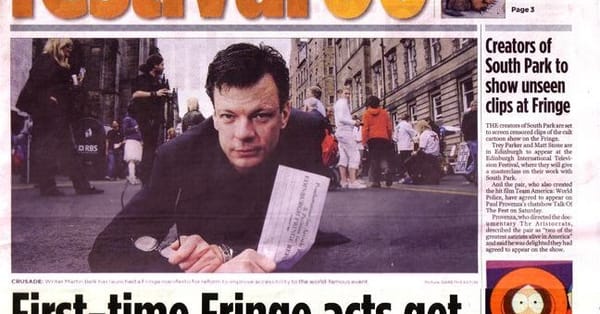
More than a third of the people who signed the concert guest book signed on from outside North America. Many from locations where the new music scene is not warmly received by government officials, says Martin Belk of Sense Net, and CEO of a yet-to-be-named Internet broadcasting venture.
“The artists were ecstatic to reach people all over the world without having to tour, and to get their music into markets that do not usually have access to the music scene,” he says.
In major markets, stadium shows are on their way out because they are a nightmare to produce, and the fans know stadiums are not great concert environments, so everything is moving to smaller venues, Belk says. In his view, with all the shows moving to smaller halls, it’s almost impossible to get tickets, so fans are excited about Internet-based concerts.
Sense Net’s proof-of-concept performance included Deborah Harry of Blondie, Joan Jett & the Blackhearts, and new music groups the Lunachicks, R&R Hall of Fame and American Recordings artist Psychotica, and Rolling Stone magazine darlings Miss Guy & the Toilet Boys.
The 8-KHz Internet audio feed was supplemented with push-pull video at 1.5 frames per second. Belk concedes that the quality of the video significantly degraded as more people joined the concert, but that can be addressed by adding more hardware, providing access to higher-bandwidth connections, and improved technology.
The concert remained on-line for about two weeks following the live performance, so those that missed it the first time around could view it at their convenience.
Later this year Belk expects to be broadcasting three to five large events each month, and perhaps 20 smaller events.
Successful niche marketing
Capital Record’s Heller is targeting her Web infrastructure on marketing and promoting artists, and of course their product. But in the music business, it’s hard to separate the product from the person.
“Any impression you build to bring an artist along is very important,” Heller
says. “It all becomes part of the sum total that makes an artist successful.”
Anecdotal evidence from research firms has convinced Heller that “a staggering number” of people are now reporting they heard about a group or an album on the Internet and that impression is affecting purchase decisions.
“This is really an artist development business. We are dealing with a world that is all about visuals and immediate access -- breaking a new album and jumping on the momentum. The Internet is a good match for the work that we do,” Heller says. “The Web is as important for us in selling Frank Sinatra, the Beach Boys, and the Beatles, as it is in breaking and selling Everclear, Radio Head, and the Foo Fighters.”
Segmentation and target marketing, according to American Recordings’ Geiger, is a particular strength of the Web. Rather than promoting to the mass market, the Web provides the tools to service specific niches. One of the artists on last years Lollapalooza tour was Courtney Love, a singer with Hole, Geiger says. As a result of actively using Usenet news groups and on-line chat sessions, Geiger calls Love the first cyber rock star. “Courtney really galvanized alternative music in cyberspace by making fans go on-line and see what she was saying, because she was saying some pretty wild things,” Geiger says. That ability to segment and talk directly to interested fans simply would not be as economical or as effective without the Web.
It gets the work done, too
Like many industries, the entertainment field is also recognizing that the Web’s multimedia publishing model provides a great resource to run the business.
Heller, who is working on Capital’s Intranet, says the same infrastructure used to publish information to the press and to facilitate interaction with fans, can support a collaborative work environment. Artists, managers, promoters, and people at the record company need access to all the press assets they can get. Often they need to share these resources from many different locations, and password-protected Web access provides a mechanism to do that.
Web surfers meet real surfers:
Sports on the Web
Skipping from music to sports, the Prime Sports Event Group (www.primeevents.com), which is in the process of merging with Fox Sports, is using to Web to support the efforts of eleven regional affiliates, says Don Meek, a Prime Sports vice president.
“We are able to distribute huge amounts of information in a digital format. Rather than reproduce information, localize it, print it and ship it out, we are putting information out through our Web and ftp servers,” Meek says. “The local markets can download, customize, and distribute it on their own. Prime’s programming is actually similar to the music business, in that they are promoting specialized events to highly segmented audiences, and leveraging the Web to reach farther and more efficiently.
The US Open of Surfing Web site was Prime Sports first Internet effort. At last year’s event Prime sold tickets and soft goods -- hats, T-shirts, jackets, etc. -- via the Web. Indeed the Web produced about 30 percent of related sales for the event, Meek says.
Prime will follow the same program with its mountain biking, tennis, and pro beach volleyball sites this year.
“As copyright holders and content providers in the non- Internet arena, we have the ability to promote our on-line content in many different ways -- television commercials, banners at events, hats and T-shirts -- everything has the URL on it,” Meek says. Since sports content is very dynamic and compelling, his plan is to build landmark sites that attract people, and then profit from that in sponsorship revenue and transaction revenue.
Adding meaning to the madness
For all the fun and hype in the entertainment industry’s use of the Internet, some folks are out there trying to do good while they also do well. Such is the case with MTV’s Choose or Lose Web project ( chooseorlose.com/chooseorlose/) to encourage 18- to 24-year olds to get out and vote intelligently in this year’s presidential selection process. “When we ask why they weren’t voting, they said it was not that they did not care, but that they felt disenfranchised by politics and a political media that ignored them,” says Caroline Vincent, director of press relations for New York-based MTV.
Choose or Lose provides on-line voter guides, specials, and news coverage designed to inform 18- to 24-year olds. Music performers also share some of their political views and the importance of political participation with the on- line crowd.
MTV added a SPARC station Voyager-equipped Choose or Lose bus that will travel the country. The bus, complete with Internet connection, is traveling the states registering young voters and introducing them to political coverage on the Internet. Bob Dole even conducted an on-line chat from the bus while traveling between campaign stops in New Hampshire, Vincent says.
Movies and their Stars on the Internet
Many sights on the Internet provide great entertainment information on movies and the stars who make them. Here are just a few of the better ones. The Filmzone has up-to-date information on film oriented events, interviews with stars, film reviews, and much, much more.
The Winona Ryder Site is a comprehensive archive of Winona Ryder’s film career. The site includes hundreds of pictures, audio/video clips, and magazine articles (searchable by keyword). Recognized both on and off the Internet as the premiere resource of information about this ‘Generation-X’ actress. -- created and maintained by Eric Harshbarger.
Resources Yahoo’s music index http://www.yahoo.com/Entertainment/Music/ Capital Records http://hollywoodandvine.com/ Ultimate Band List http://american.recordings.com/wwwofmusic/ubl/ubl.shtml Lollapalooza http://www.lollapalooza.com/ American Recordings http://american.recordings.com/ Sense Net http://www.sensenet.com/ virtual concert http://inconcert.com/ Prime Sports Event Group www.primeevents.com/ MTV Choose or Lose http://chooseorlose.com/chooseorlose/ Barry D. Bowen (xeno@bgroup.com) is a business computing analyst and writer with the Bowen Group Inc. This story originally appeared on Sun Microsystem’s SunSoft Catalyst CDWare platter for May - August.

![[PUBLISHED] Ph.D. Thesis: Presenting the Animateur d’Art...](/content/images/size/w600/2026/01/54d8d4a3-9dfb-40ae-be21-b46b8482c396_613x859-jpeg.jpg)
![[BOOKS] 'Back to Start with Lady Bunny', 'What's Left of Leatherdale', A GREAT GAY BOOK: May 2024](/content/images/size/w600/2026/01/b995de77-6f85-4847-9ec0-4f51160c7b39_1044x742-1.png)